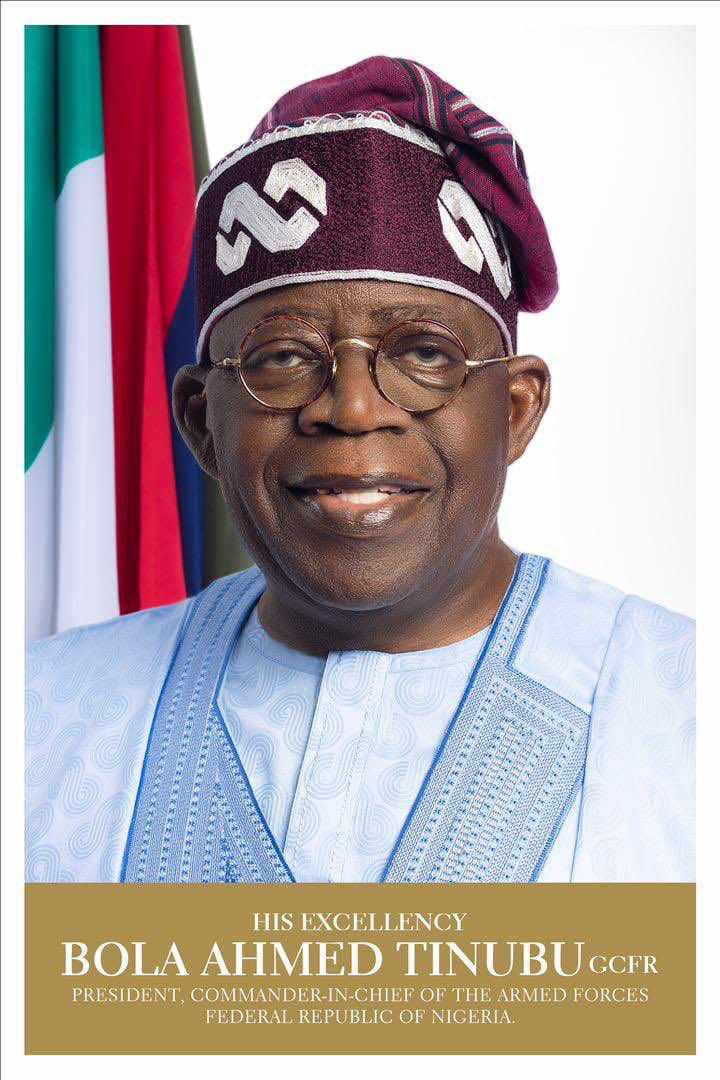

A September 21, 2023, enterprise news report (i.e., a news report that’s not from a news release or a press conference) from the Daily Trust found that “Despite the numerous assurances by President Bola Ahmed Tinubu that… subsidy is gone… the federal government paid N169.4 billion as subsidy in August to keep the pump price at N620 per litre.”
What happened? I thought petrol subsidies were evil, harmful, no-good drains on the economy that should be avoided at all costs. I thought the government had no responsibility to tame the savagery of market forces and to protect citizens from the full fury of the vagaries of international oil prices.
I thought the “invisible hand” was supposed to regulate prices unaided by any governmental intervention (which has been thoroughly disproved by the fact that petrol marketers arbitrarily increased their pump prices after Tinubu precipitously announced that subsidies were gone even though they were selling the old stock of petrol that had been subsidized by taxpayers.)
I thought it didn’t matter that unaffordable and extortionate petrol prices are causing hundreds of thousands of Nigerians to starve and die, small- and large-scale industries to collapse, unemployment to skyrocket, the economy to shrink, quality of life of the average citizen to plummet, and Nigeria as a whole to regress to the Stone Age.
With the naira on an unprecedently free fall against the dollar and global petrol prices on the rise, it’s inevitable that a liter of petrol would have been at least 1,000 naira a liter by now if the “invisible hand” that conservative economists have invested so much faith in were left to determine the pump price of petrol. It’s conceivable it could climb to 2,000 naira per liter in the coming months if the government doesn’t interfere with the vagaries of the market.
Why is Tinubu committing “economic blasphemy” by misdoubting the power of the omniscient and omnicompetent Invisible Hand to take care of everything? Why is he intervening to stop the pump price of petrol from getting to its appropriate rate? Does he want our petrol to be so affordable that our neighbors will smuggle it?
Does he no longer want to save money to build and renew infrastructure and fund education? (Never mind that we haven’t seen where the money saved from the withdrawal of subsidies since May has been put to productive use. Or that only the living and the healthy can use infrastructure and go to school.)
Well, I guess Tinubu and his ideological cheerleaders in and out of government are beginning to see what some of us have been saying for years: that subsidizing an essential commodity like petrol in Nigeria whose price affects every facet of life is not an option; it is an abiding moral imperative.
The government’s primary reason for existing is to protect lives. As is by now evident, withdrawing fuel subsidies in an oil-producing country that is the poverty capital of the world, that has one of the world’s lowest minimum wages, and that has no public transportation system is a trigger for mass suffering and mass deaths.
There is something else that must have informed Tinubu’s decision to stealthily halt the impending rise in the pump price of petrol: insurance against mass anomie and revolt.
Although Nigerians can be some of the most incredibly docile and self-hypnotic people on earth, it’s stupid to assume that they will always be so. As someone once remarked, “The day when large numbers of men have to choose between feeding their children and providing a roof over their heads—is the day when nothing will stop the torches and pitchforks.”
In other words, there is a limit to human endurance of pain and deprivation. Most people won’t listlessly just roll over and perish because of persistent adversity. People with an overpowering will to live who can’t survive government-engineered suffocation of their lives (which withdrawal of subsidies amid endemic poverty represents) will turn to crime out of desperation. That’s why the crime statistics in Nigeria have quadrupled since May.
But it’s going to get worse. For now, the victims of crimes are the poor and the disappearing middle class. The rich and the powerful are next if the current subsidy-removal-activated excruciation doesn’t abate. After the poor, the lower middle class and the middle class are dispossessed, the rich will become the next meal of the desperately poor.
“Eat the rich” is an enduring, often metaphoric, revolutionary catchphrase usually mouthed by conscientious, socially sensitive middle-class intellectuals to denote redistributive economic justice, but it could become literal in Nigeria once it gets to the point when only the rich—politicians and their underlings, wealthy businesspeople, and other government-subsidized fat cats—have all the food. That’s why so-called bread riots are historically the most common triggers of momentous mass insurrections.
Cynical conservatives in the West like to say subsidies for the poor are basically protection money to stop the poor from stealing and revolting. The rich in the West don’t want to be awake because the poor can’t sleep. The late Professor Sam Aluko captured it brilliantly in 1999 when he memorably said, “The poor cannot sleep because they are hungry, and the rich cannot sleep, because the poor are awake and hungry.”
That is why the welfare state was brought forth in the West. The International Encyclopedia of the Social & Behavioral Sciences defines a welfare state as “a state that is committed to providing basic economic security for its citizens by protecting them from market risks associated with old age, unemployment, accidents, and sickness.”
Ironically, it is the same welfarist West whose institutions (such as the IMF and the World Bank) encourage, in many cases compel, developing countries like Nigeria to strip the poor of basic economic security through the removal of subsidies.
Of course, our rapacious, self-loving leaders who want exclusive control of the state’s resources for themselves and their families welcome the freedom from being responsible to struggling citizens that removal of subsidies represents. And slavish, unthinking ideologues of the “Washington Consensus” cheer on.
There is not an example of a single country on earth that has made progress on the basis of the cruel policies that the World Bank and the IMF impose on countries. As Professors David Held and Anthony McGrew persuasively showed in their book, Globalization/Anti-Globalization: Beyond the Great Divide, “Developing countries that have benefited most from globalization are those that have not played by the rules of the standard [neo]liberal market approach, including China, India and Vietnam” (p. 226).
In fact, even America, the patron saint of capitalism, doesn’t practice the sort of cruel, extreme capitalism that Tinubu is practicing and that even his opponents promised they would practice if they got a chance to be elected president.
As I pointed out in my December 10, 2016, column titled “Dangerous Fine Print in Emir Sanusi’s Prescriptions for Buhari,” when it comes to the welfare of its citizens, America doesn’t practice on its soil what its institutions preach to developing countries.
I wrote: “But when the United States went into a recession between 2007 and 2009, it didn’t follow any of these neoliberal prescriptions. The dollar wasn’t devalued. Subsidies weren’t removed. The state wasn’t rolled back. The government didn’t retrench workers. Taxes weren’t raised.
“On the contrary, the government increased expenditure. The financial burden on the populace was eased with lower taxes. Government, in fact, sent lots of money, called tax rebate checks, to lower- and middle-income families so they could have money to spend, since recession is essentially the consequence of people not having enough money to spend. I was a beneficiary of the tax rebate, so I know what I am talking about. Financially distraught private companies (particularly car manufacturers and banks) were bailed out by the government.”
I don’t know if Tinubu and his team are finally realizing that the problem with fuel subsidy was the monstrous corruption in it and not the subsidy itself. Most of what passed as fuel subsidy was fraud. Any government worth the name should be able to tackle corruption and administer subsidies for the collective benefit of Nigerians.
But Tinubu was swept over by the idiotic anti-subsidy mass hypnosis that has engulfed Nigeria in the last few years.
This has ensured that Tinubu has had by far the shortest honeymoon in power. Why won’t he? He promised to hit the ground running but instead hit the ground ruining— with his infamous “Subsidy is gone for good” declaration on inauguration day. He promised renewed hope but is giving renewed hell. He promised the dawn of a new era, but people are seeing the dawn of a new error after Buhari.
By Farooq Kperogi